This post was written by Caroline Holder, Pachamama Alliance staff member.
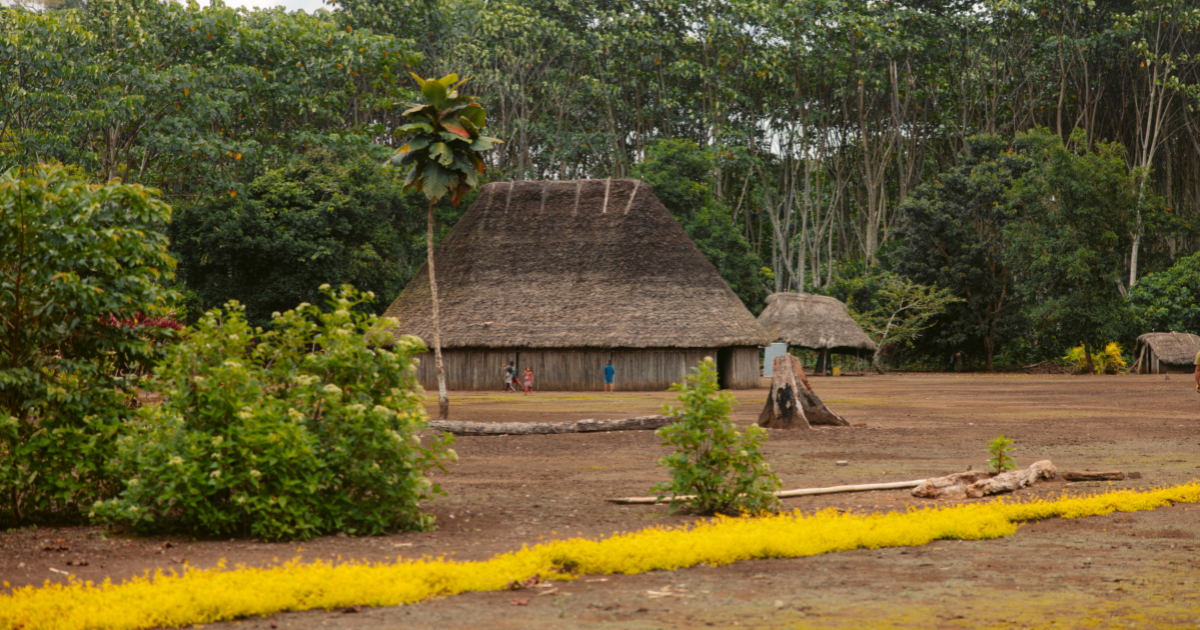 Growing up in Costa Rica, I spent much of my childhood surrounded by the rainforest, a place that taught me that nature is alive and communicating if we pause to listen. Those early encounters instilled in me a deep respect for the complexity of the natural world and a lifelong desire to experience the Amazon rainforest firsthand. This September, as Digital Marketing Manager at Pachamama Alliance—sharing stories about our work in the Amazon—I had the opportunity to do just that.
A Pachamama Journey invites participants deep into the heart of the Amazon to experience the living traditions and spiritual practices of its Indigenous stewards firsthand—to learn from their worldview, deepen our understanding of the interconnectedness of life, and return home inspired to act on behalf of the Earth.
Over the course of eleven days, my travel companions—two colleagues from the Development team and two women from England who joined after learning about the experience online—and I traced a route from the Andes to the Amazon basin, immersing ourselves in the ancestral wisdom of the Sápara and Achuar peoples. What unfolded was more than a journey; it was a guided passage into another way of seeing and being in the world.
From the Andes to the Amazon
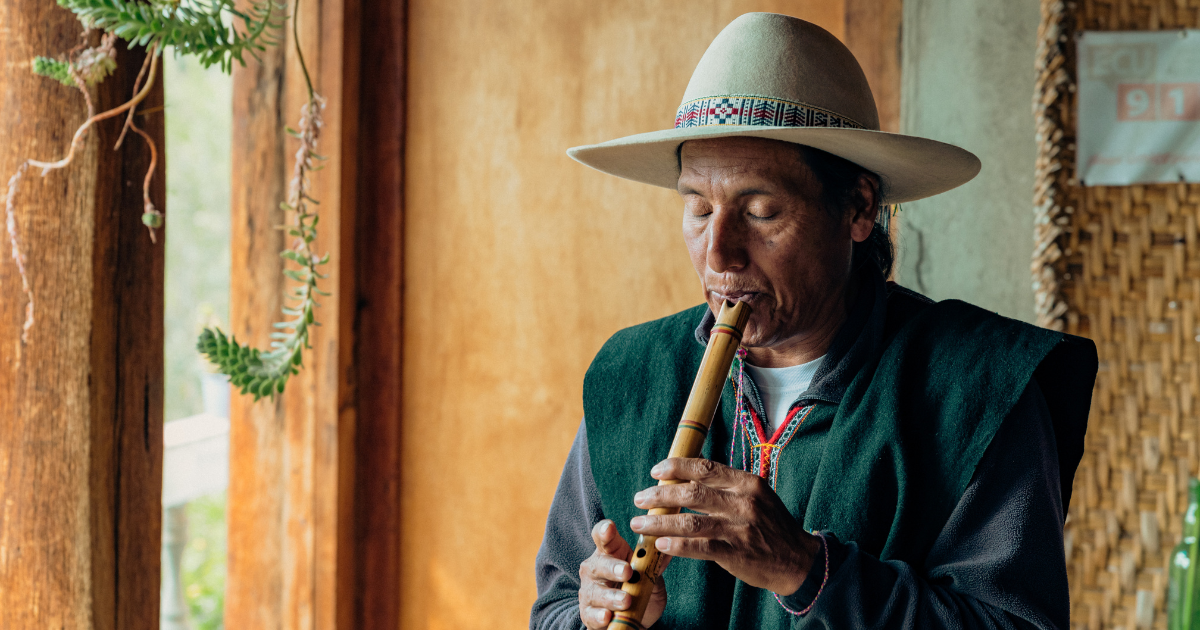 Our journey, Paths of Wisdom: Ancestral Traditions of the Indigenous Cultures, began in Quito with a winding drive to Sierra Alisos, a peaceful lodge nestled in the Andean foothills outside Quito. The air was cool, filled with the scent of eucalyptus, and views of snow-capped Cotopaxi Volcano, the second highest peak in Ecuador. It was here that we shared our first meal together and received an orientation that set the tone for the days ahead—an invitation to be fully present, to listen deeply, and to enter the journey with humility and openness.
The morning brought a walk through dense secondary forest led by Raul, where we paused in a clearing for a “spirit salute,” a quiet practice of attuning ourselves to the rhythms of the land. It was an early lesson in the pace of life here—slower, deliberate, and attentive to the presence around us.
We then began our descent toward the Amazon basin, heading south along the Avenue of the Volcanoes, stopping in Salasaca to meet Alonso, an Indigenous weaver. We were welcomed with a traditional cleansing ritual—a quiet, beautiful ceremony where I felt the first hint that this journey would be about more than seeing new places—it would be about entering a different rhythm altogether.
Following the purification ceremony, he shared his craft, demonstrating the intricate and painstaking process behind creating handwoven sashes and other textiles. Watching him work it was easy to feel the connection between his hands, his ancestors, and the culture embedded in every pattern. This was followed by a traditional Andean meal with our Indigenous hosts, including a bowl of traditional “locro” soup and endless cups of warm herbal tea.
From there, we descended further into the Amazon basin, stopping briefly in Baños to cross a wooden suspension bridge above the Pastaza River canyon. This brought us to Cascada El Pailón, a roaring waterfall whose force left me momentarily speechless. The sheer power of the falls was humbling, a reminder of the natural forces we would soon navigate more intimately in the rainforest.
By evening we reached the gateway to the Amazon, in the town of Puyo, where the air was alive with sound. I remember lying in bed that night, listening to a chorus of insects and frogs, knowing that the next morning we would fly into the heart of the forest.
Immersion with the Sápara People
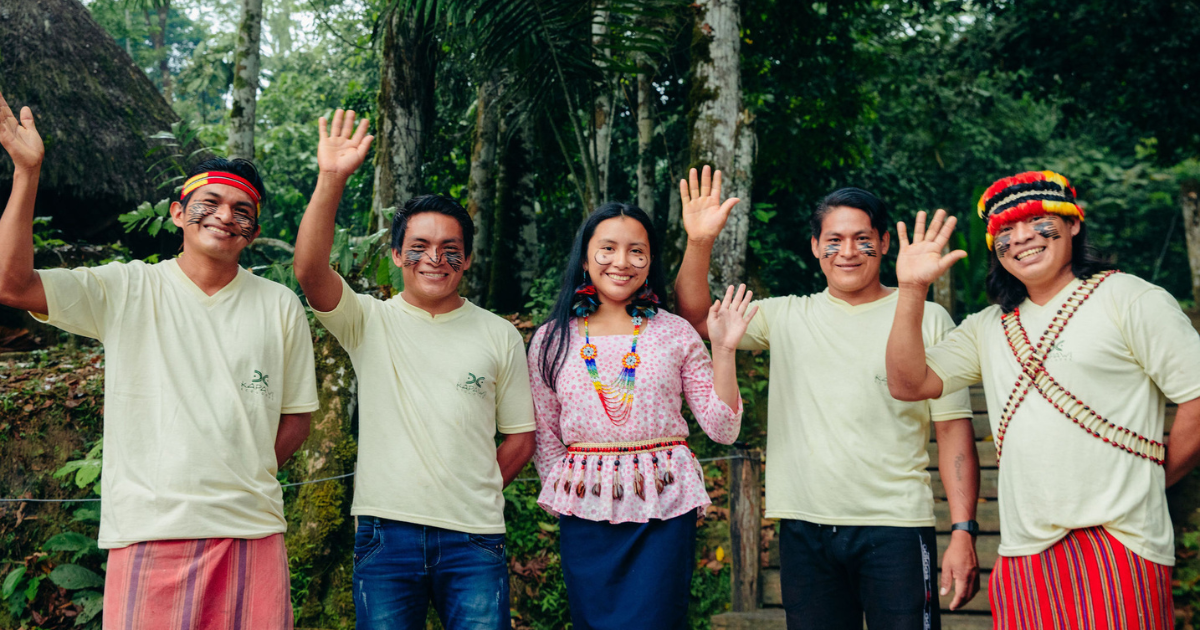
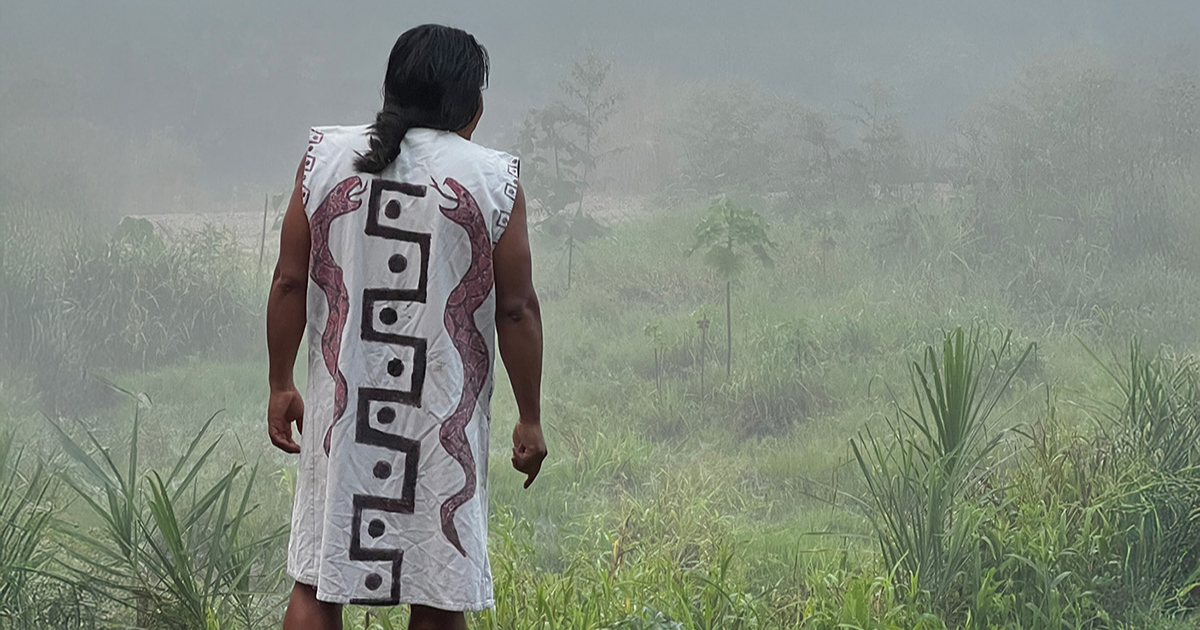 The following day, a small plane carried us southeast over an endless canopy of green punctuated by winding rivers to the Sápara territory. Upon landing in the village of Llanchamacocha, Manari and other Sápara community members welcomed us with smiles, a cleansing ritual, and face painting. Each of us was given a Sápara name—mine, Úmuca, translating to “agouti,” an animal symbolizing provision and nourishment. This marked our entry into their land and way of life, a reminder that entering this protected land was not simply a physical crossing but also a spiritual one.
For two days, we stayed at the Naku Center, on the banks of the Conambo River. During that time, we shared river dips, dream discussions, and conversations with elders, gaining insight into the Sápara’s vision for defending their forest. We hiked through the primary rainforest with guides who shared their knowledge of medicinal plants and their deep spiritual relationship with the forest. Every sound, from bird calls to the hum of insects, reinforced the living presence of the forest around us.
Kapawi Ecolodge and Life with the Achuar
 Leaving Naku and the Sápara community was bittersweet. Their generosity and the intimacy of those two days left a deep impression. After heartfelt farewells, we boarded another small plane to fly deeper into the Amazon, arriving on a well-maintained landing strip in Achuar territory. Walking from the airstrip to the river’s edge, we spotted a pygmy marmoset peering curiously from the treetops—an encounter that underscored the biodiversity that thrives alongside Achuar stewardship.
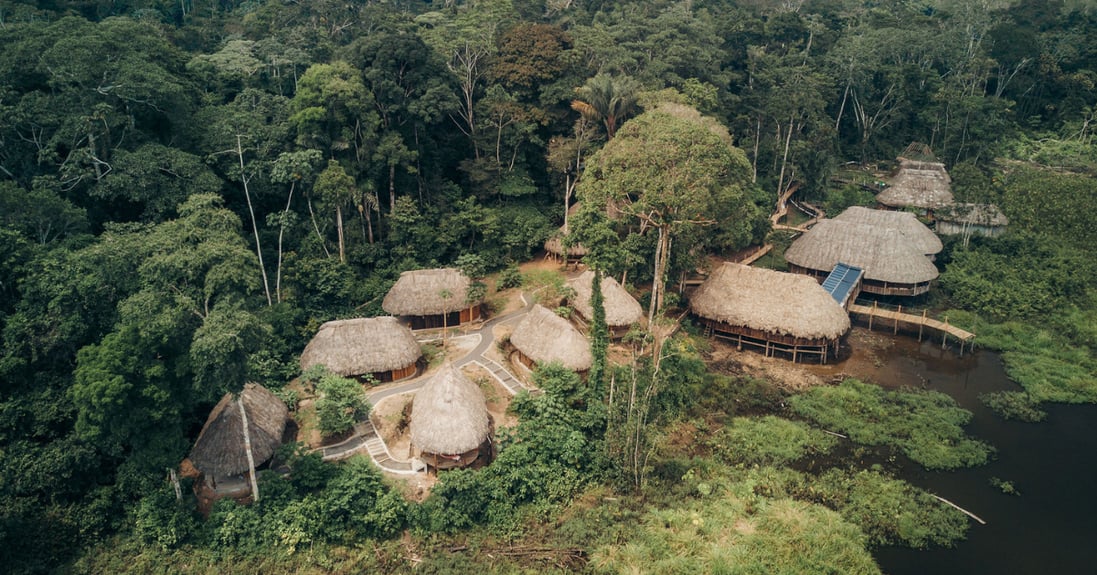
A short boat ride down the Capahuari River brought us to Kapawi Ecolodge, a community-owned and operated lodge that blends traditional knowledge and sustainable ecotourism—a living example of Indigenous-led stewardship, where visitors are guests on ancestral land. Here, Ramiro (“Chumpi”), our Achuar guide, introduced us to the lodge and its surrounding forest.
The following days were a tapestry of experiences—a pre-dawn guayusa tea ceremony that created a space for sharing dreams and intentions, a hike to the towering grandfather and grandmother kapok trees, boat rides along the Capahuari River with sightings of pink river dolphins and hoatzin birds, and observation of unique flora such as the walking palm and bloodwood tree. We also practiced traditional skills, including a brief introduction to the blow-dart, grounding us in the ingenuity and resourcefulness that sustain the Achuar way of life. The forest felt sacred, each root and branch a testament to centuries of life.
Ceremony and Spiritual Connection
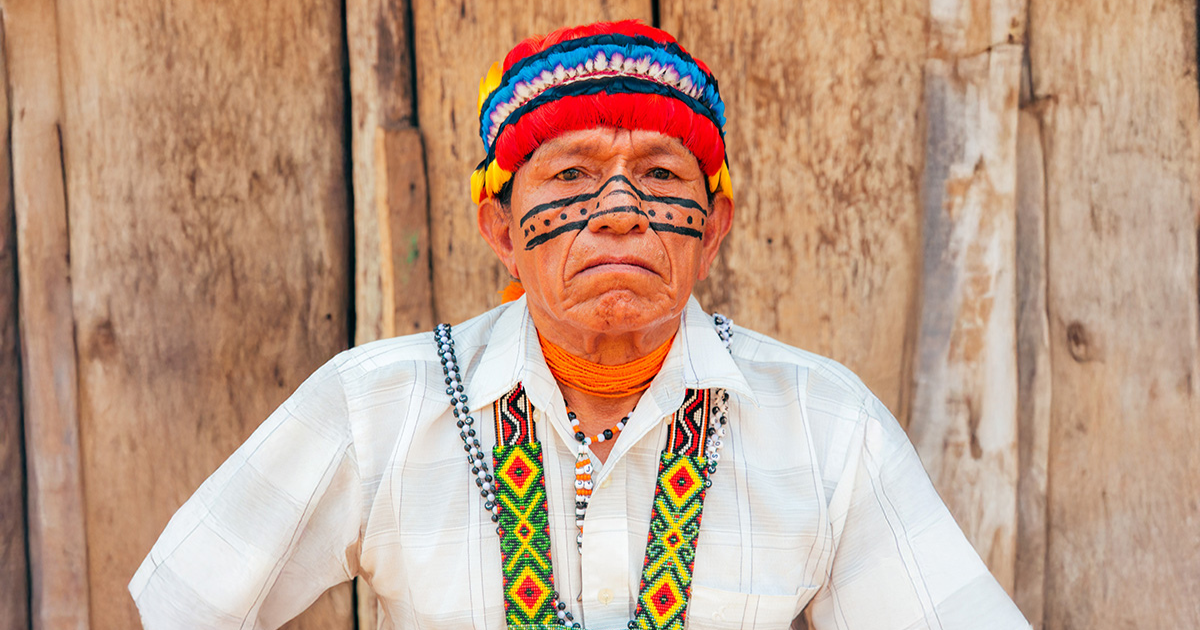 An hour-long journey by boat from Kapawi took us to the community of Wayusentsa, where we participated in a shaman-led ayahuasca ceremony. The experience underscored the depth of Achuar spirituality and the communal respect that surrounds it. Following the ceremony, we shared a reflective session with shaman Rafael interpreting our dreams and visions, offering insight into how the Achuar navigate understanding, healing, and connection with the forest.
Time for Reflection
 As the days unfolded, a rhythm emerged—one shaped by the cycles of the forest, communal connection, and ritual. The pace of life slowed. There was time to reflect, to journal, to simply be. Each interaction—the ceremonies, the canoe rides, the meditative moments beneath the kapok trees—offered insight into a worldview where every element, from river to insect, has significance
Evenings at Kapawi were gentle and reflective. Watching the sunset, listening to nocturnal calls, or simply noting the flutter of a blue morpho butterfly across the forest floor, it became clear how richly the Amazon nurtures life, knowledge, and connection
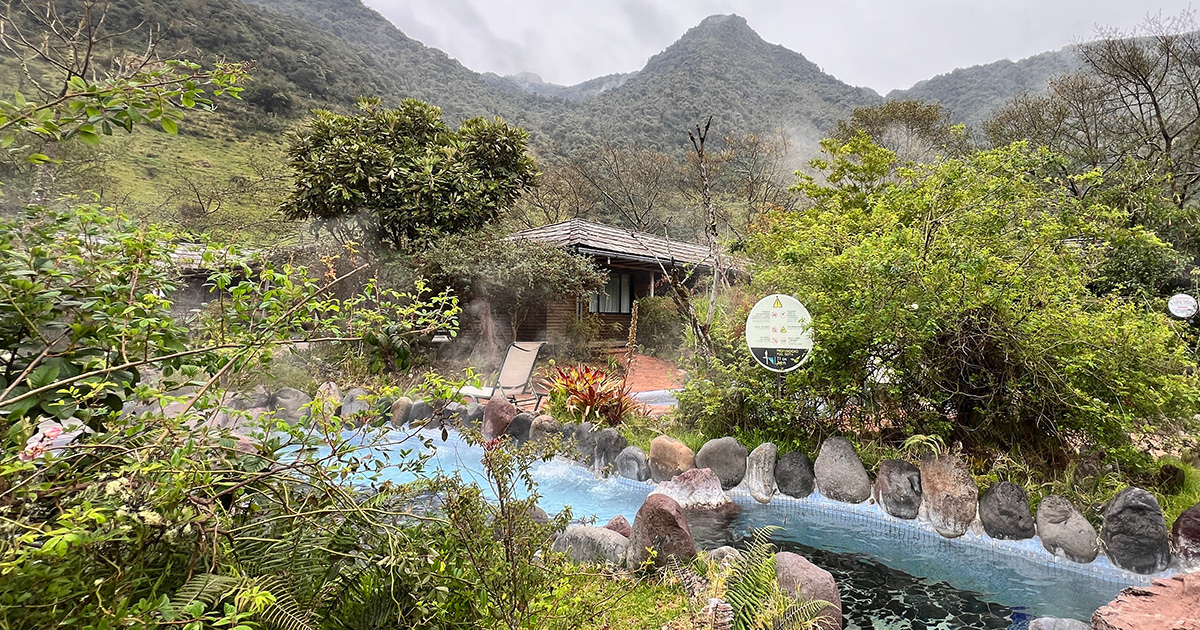
Returning to the high-altitude landscapes of the Andes offered space to reflect on the knowledge and practices we had witnessed. We paused for a night at the Termas de Papallacta—a series of thermal pools—to soak in the warm waters and reflect on the experiences that had reshaped our perspectives. Surrounded by mountain mist and the restorative setting, I felt a profound sense of gratitude for the journey and the communities that welcomed us.
Our final day in Quito brought a celebratory farewell dinner, where we shared stories, laughter, and gratitude for a journey that had touched every part of us.
An Invitation to See Differently
 For me, the journey wasn’t just about witnessing the Amazon; it was about stepping into it, even briefly, and learning to see through the eyes of those who have lived here for generations. The Sápara and Achuar have created a vision of life that honors the forest and all its inhabitants, and being part of that vision, even for a short time, leaves a lasting impression. This journey was, above all, an invitation: to listen more closely, to observe more carefully, and to carry the wisdom of the forest with me, back into daily life.
These experiences remind me that the Amazon is not a distant wilderness—it’s the living, breathing heart of our planet, and our shared future is intertwined with its fate.
If you feel called to experience the Amazon in this way, you can schedule a conversation with our Pachamama Journeys team to explore whether this journey is right for you—no pressure, just an open invitation to learn more.