True financial justice is only possible if it is rooted in social and climate justice. The Amazon is not a trade-off. It is the very condition for a livable future.
 Debt, when unjust, kills. Not in an immediate or direct way, but through systematic violence: it restricts access to healthcare, education, and clean water, and leaves millions without the means to face the most extreme impacts of the climate crisis, biodiversity loss, and land use change. Today, more than 60% of low-income countries are over-indebted. This isn’t just a technical issue, it’s deeply political. It speaks volumes about how power, resources, and life are distributed in the world.
At the 4th International Conference on Financing for Development held in Seville, Spain, it became clear that the international financial architecture is not only outdated, but incompatible with human rights and planetary boundaries. Yet this uncomfortable truth is often ignored. Countries in the Global South—especially in Latin America, the Caribbean, and Africa—pay the highest debt interest rates while facing the worst effects of a climate crisis they did not cause.
Now more than ever, we must say it plainly: the climate crisis is a crisis of inequality.
While the wealthiest 10% of the global population is responsible for more than 50% of emissions, millions still live without electricity or clean water. The claim that “there are no resources” to address these crises quickly unravels when we consider the facts: global military spending tops $2 trillion each year and extreme concentrations of wealth continue to rise unchecked. What’s lacking isn’t money. What’s lacking is political will, coherence, and a new global pact that prioritizes life over profits.
The Amazon is at the center of this crossroads. Not only because it is one of the planet's main climate regulators and home to more than 10% of the world's biodiversity, but because it embodies the conflict between two worldviews: one that considers it a sacred territory and a common good, and another that reduces it to a commodity or financial asset.
The Indigenous peoples who live there are not objects of policy but rather historical subjects with the right to decide their own future. And yet, in the name of “sustainability,” they are often subjected to extractivism disguised as ecological transition.
So-called debt-for-nature swaps can offer solutions, but they are not without risk. Therefore, it is urgent to analyze not only what these transactions are carried out, but also how, for whom, and with what guarantees.
Ecuador offers real-world examples that have attracted international interest. In 2023, the country carried out a financial operation for the Galápagos Marine Reserve that reduced its public debt by more than $900 million, lowered debt service by $1.1 billion between 2030 and 2040, and allocated nearly $400 million to conservation. In 2024, a similar approach was applied to the Amazon River Corridor, reducing $527 million in debt and mobilizing over $450 million for resilient infrastructure, sustainable economic activities, and Amazonian territorial development.
These cases show that it's possible to align debt relief with climate action, biodiversity protection, and local benefits. Since 2019, Ecuador has promoted regulatory reforms that allow channeling private investment into sustainable projects. Its thematic bond market now exceeds $900 million and bilateral debt conversion mechanisms are helping redirect resources toward education, healthcare, and the environment.
But caution is needed. Not all debt swaps are fair and not all “green finance” is ethical. The key lies in meaningful participation by Indigenous peoples, respect for their collective rights, and ensuring that decisions are made with, not about, their territories. Climate justice cannot be built on new forms of dispossession.
Multilateral commitments like the Baku-Belém Roadmap and the Seville Agreement have opened valuable spaces to discuss these transformations. But there is still much to be done. To move toward economic justice that is also climate justice, we need:
- Clear financing targets for adaptation, loss and damage, and resilience, especially for the most vulnerable countries.
- A development model that transcends extractivism, whether from the North or the South.
- Global progressive taxation so that those who pollute most and hoard wealth contribute more.
- And above all, real protection of the Amazon—not as an “ecosystem service” or “carbon sink,” but as a living territory and a source of spirituality, identity, and culture for its peoples.
The challenge is not technical. It’s political. It’s about changing the rules of the game and not just finding solutions within a broken system. That’s why we must urgently imagine a new way. A path based on equity, sovereignty, human rights, and respect for planetary limits.
Yes to debt relief. But not by mortgaging rivers, forests, or peoples. True financial justice is only possible when it’s grounded in social and climate justice. Ecuador has shown that alternatives are possible, but no country can do it alone. International cooperation, global solidarity, and civil society pressure are essential to opening this new path.
The Amazon is not a cost of doing business. It is the very condition for a livable future.
For more information:
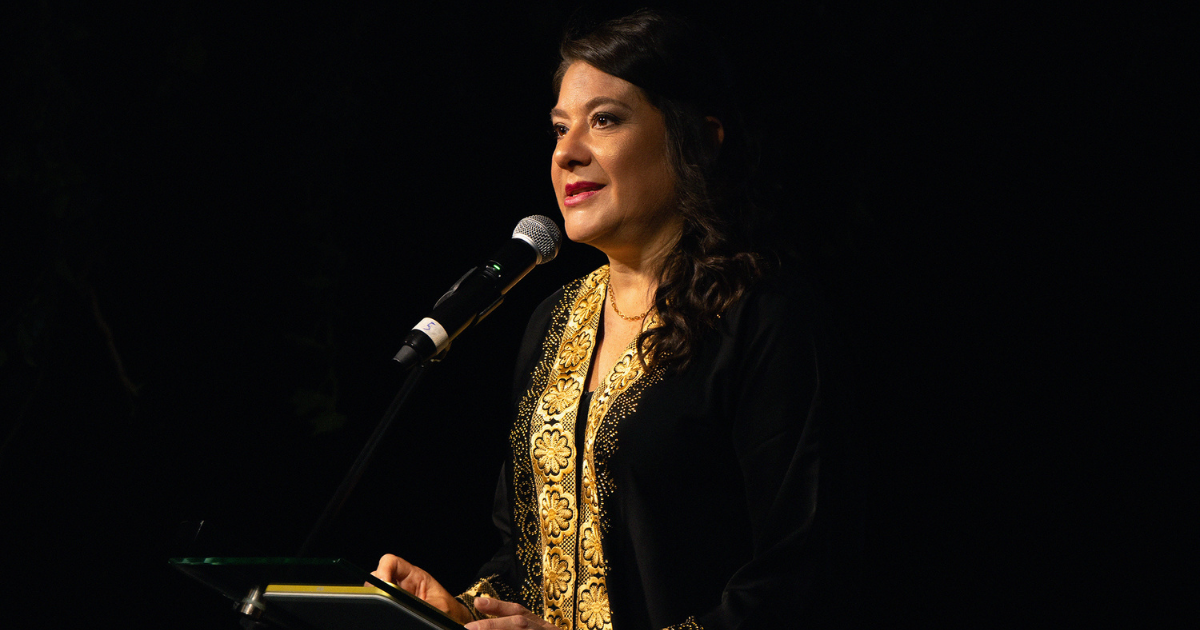
Opinion editorial by Belén Páez, President of Fundación Pachamama and Vice President of Pachamama Alliance, for Revista Plan V.
To learn more or join our advocacy campaigns, visit www.pachamama.org.ec or contact info@pachamama.org.ec.