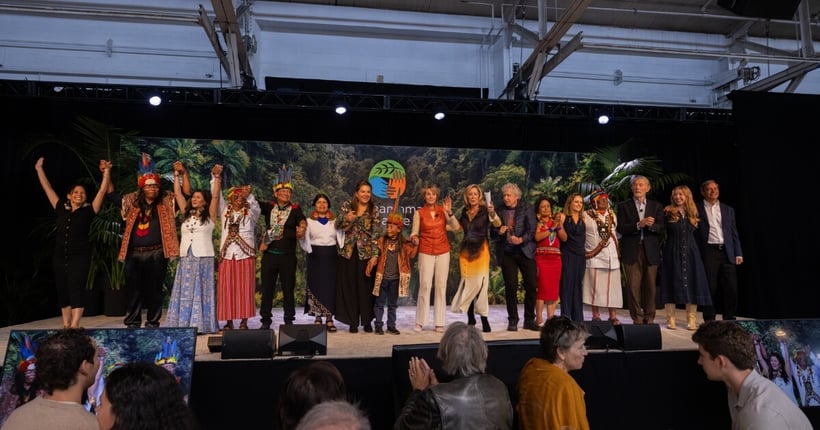
 Speakers at our 30th Anniversary Celebration in San Francisco
On September 12, more than 1,000 members of the Pachamama Alliance community gathered at San Francisco’s Fort Mason Festival Pavilion to celebrate 30 years of partnership, possibility, and collective work toward a thriving, just, and sustainable world.
The day brought together Indigenous leaders, longtime partners, founders, young changemakers, and supporters from across our community. From an opening blessing that brought the spirit of the Amazon rainforest into the room to reflections on three decades of collaboration and a vision for the years ahead, the celebration honored how far we’ve come while inviting us to imagine what we can create together.
Here are some of the moments that made the day unforgettable.
Beginning With the Living Forest
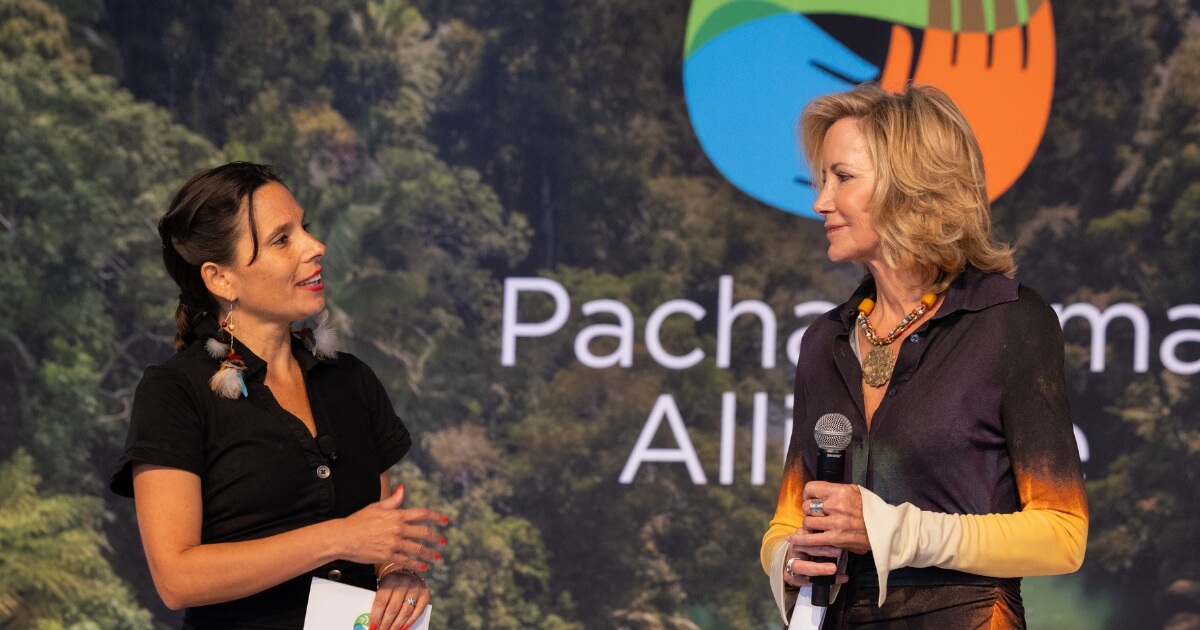 Maisa Arias Urizar (left) and Sara Vetter (right) welcome attendees to our 2026 Luncheon.
Before the speeches and celebrations began, Maisa Arias Urizar, Director of Amazon Relationships and Experiences at Pachamama Alliance, and Sara Vetter, Major Gifts Officer at Pachamama Alliance, invited the audience to pause as sounds of the rainforest filled the room.
Guests were guided to close their eyes, notice their breath, and let the outside world fall away. It was a moment to arrive fully and reconnect with the living Earth at the heart of Pachamama Alliance’s work.
“Welcome to the Amazon,” Maisa said.
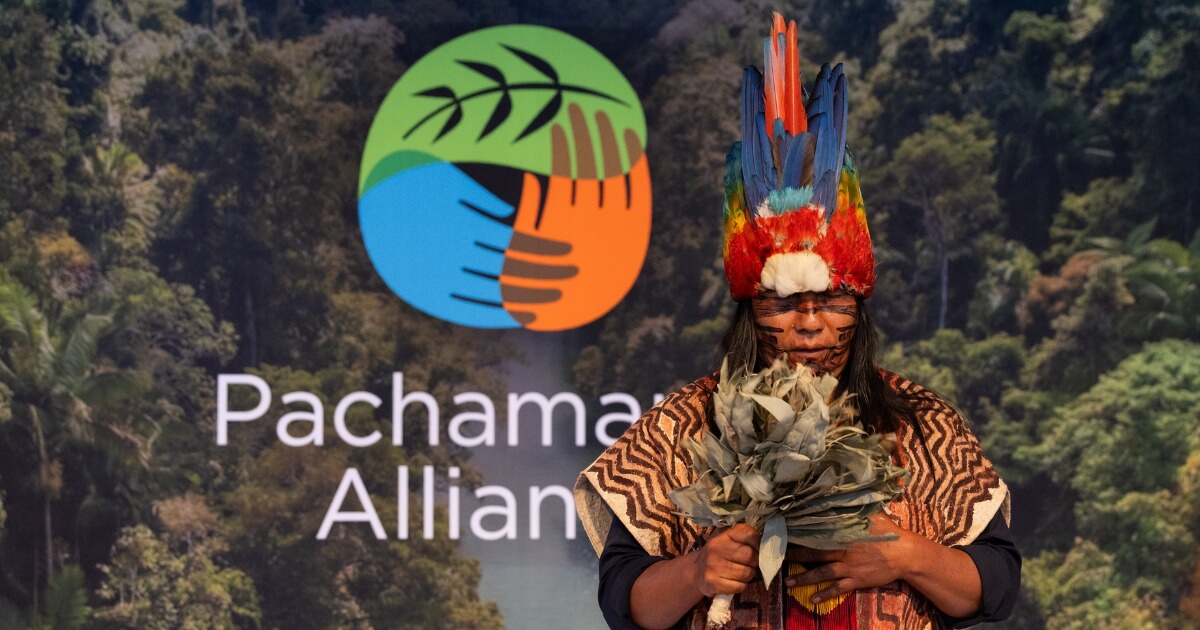 Manari Ushigua, Sápara shaman and healer, offers a blessing ceremony for our 2026 Luncheon.
With those words, Manari Ushigua, a Sápara shaman and healer, welcomed the gathering with a blessing. Whistling a soothing melody and shaking an ilupanga, an instrument made from dried leaves used to open and close the spiritual portal, he brought the spirit of the rainforest into the room.
The opening offered a reminder that this was more than a celebration of an organization. It was a gathering rooted in a relationship that began 30 years ago, when Indigenous leaders of the Amazon extended an invitation to build a new kind of partnership—one grounded in mutual respect and a shared commitment to protecting life.
Remembering the Invitation That Started It All
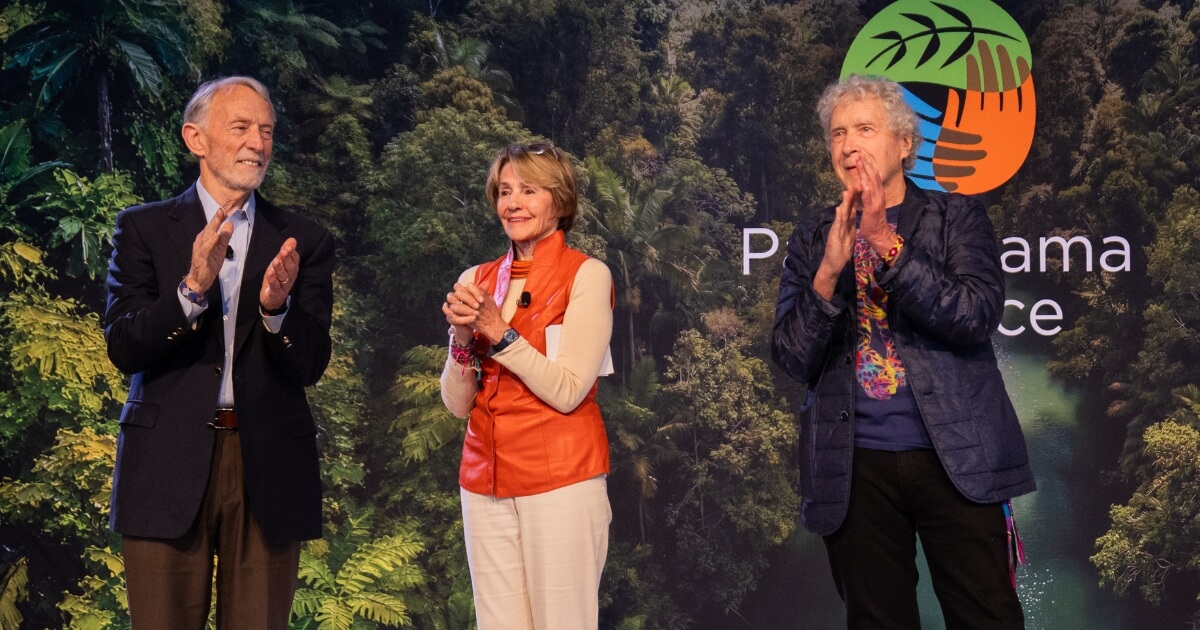 Co-founders of Pachamama Alliance, Bill Twist (left), Lynne Twist (middle) and John Perkins (right), talk about the organization's origins.
The anniversary offered a chance to revisit the origins of Pachamama Alliance through the eyes of its co-founders: Bill Twist, Lynne Twist, and John Perkins.
Thirty years ago, Indigenous leaders of the Achuar people reached beyond their territories to seek allies in protecting their lands, forests, and cultures from the threat of oil extraction. That invitation sparked a partnership that would grow into a global community.
John reflected on the significance of that original call, while Bill shared the vision and guidance that helped bring Indigenous leaders and their new allies together.
“We came to realize it was not only the Achuar calling, it was the spirit of the forest itself calling us into sacred partnership,” Bill reflected.
For Lynne, the work that has grown from that invitation continues to be extraordinary.
“The work we’ve done together and the work we’re doing now is nothing short of actually a miracle. We are working with Indigenous peoples who live in the most biodiverse place on planet Earth.”
Three decades later, the heart of that original invitation remains: to build relationships across cultures and communities in service of a world where people and nature can thrive together.
Supporting the People Who Protect the Amazon
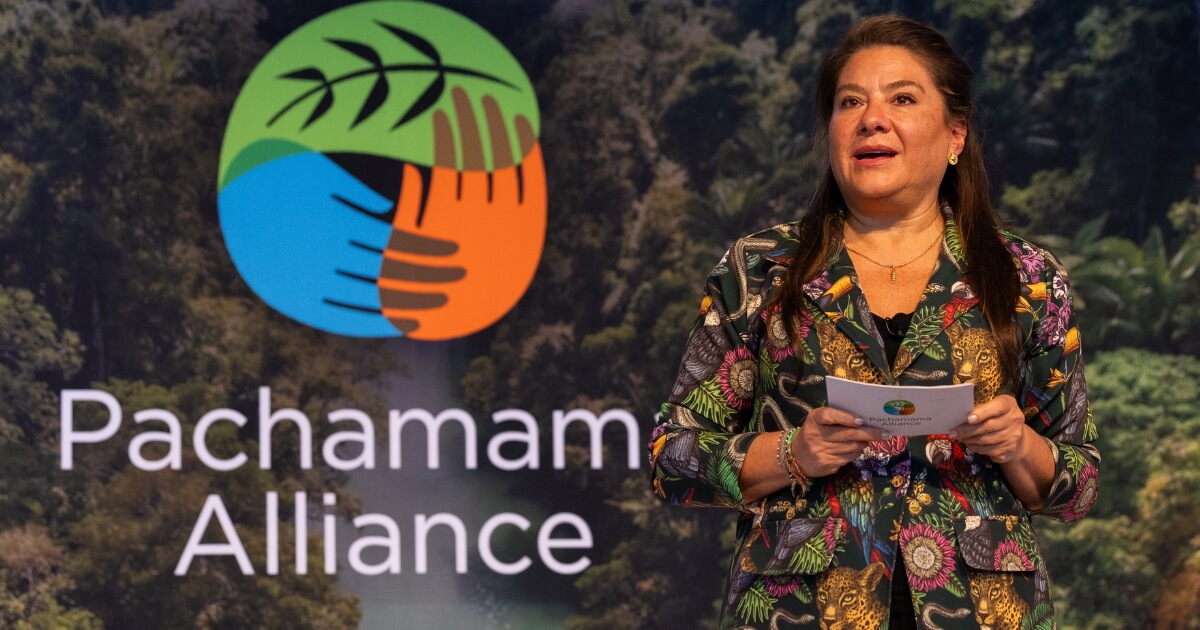 Belén Páez, president of Fundación Pachamama (Pachamama Alliance's sister organization in Ecuador), shares her vision for protecting Indigenous communities and the rainforest.
The celebration also brought the audience closer to the work happening every day across the Ecuadorian Amazon.
Belén Páez, president of Fundación Pachamama, Pachamama Alliance’s sister organization in Ecuador, shared her vision for the region and the work still needed to ensure Indigenous communities can thrive while protecting their ancestral territories.
Looking toward the next decade, Belén called for a future in which families have food security, healthcare, and safe water; children can grow up healthy; and Indigenous peoples can remain on their ancestral lands and exercise their right to free, prior, and informed consultation before projects move forward in their territories.
She also emphasized the need for economic security that allows communities to protect their forests without having to choose between conservation and extractive industries.
Belén then invited two Indigenous leaders, Narcisa Mashienta and Ramiro Vargas, to share their experiences.
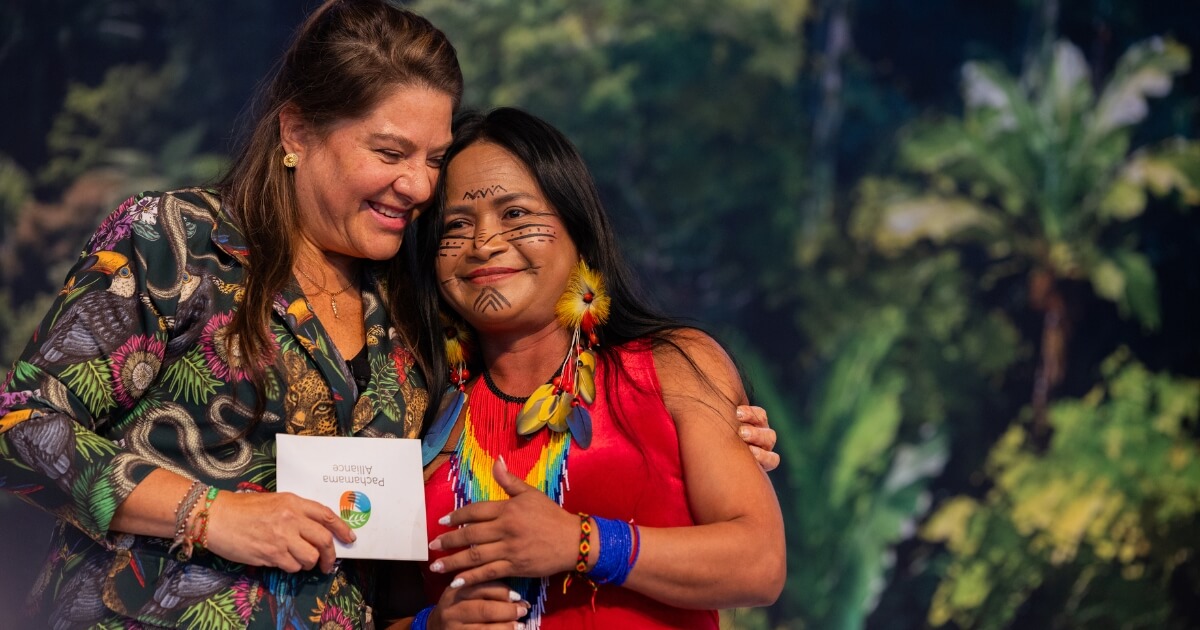 Belén Páez (left) introduces Narcisa Mashienta (right), Ikiama Nukuri Coordinator at Fundación Pachamama, to talk about the maternal health program.
Narcisa spoke about the impact of Ikiama Nukuri, a program supporting maternal health and the leadership of Indigenous women. She reflected on the progress made in expanding access to maternal care and supporting families across Indigenous communities located in remote areas of the rainforest.
“We have been able to support thousands of deliveries in the communities and maternal care has been working very well. No more death while birthing is happening in the territories,” Narcisa shared.
Her words brought the work into sharp focus: protecting the Amazon also means caring for the people who call it home, supporting mothers and children, and creating conditions in which families can build healthy futures.
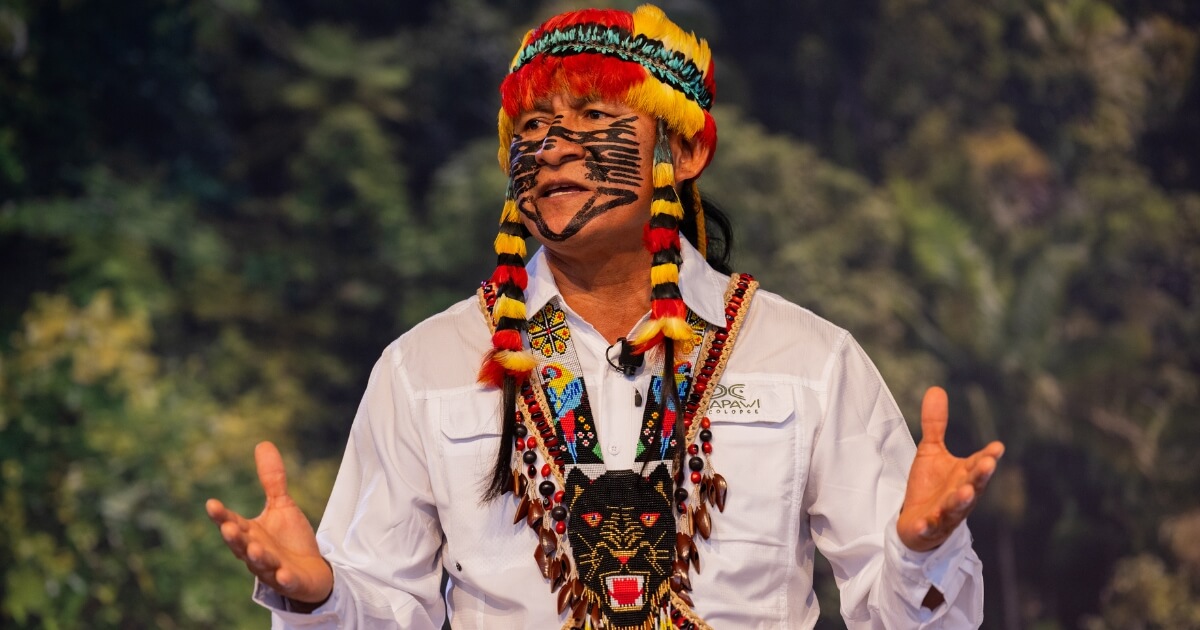 Ramiro Vargas, Manager of Kapawi Ecolodge, invites attendees to visit the Amazon and support Ecotourism initiatives.
Ramiro Vargas reflected on his own 28-year relationship with Pachamama Alliance and his current role as general manager of Kapawi Ecolodge, an Achuar-owned ecolodge in the Amazon.
Returning to San Francisco for the anniversary was a meaningful milestone.
“Today, standing here for the 30th anniversary of Pachamama Alliance is a great honor for me,” Ramiro said.
He also invited the audience to visit Kapawi Ecolodge and experience the living forest firsthand—a reminder that ecotourism, when led by Indigenous communities, can help sustain cultural traditions, support local livelihoods, and protect the rainforest for future generations.
Together, Narcisa and Ramiro offered a glimpse of what long-term partnership can make possible: work rooted in community priorities, carried forward by Indigenous leadership, and connected to the well-being of generations to come.
Uniting to Protect the Sacred Headwaters
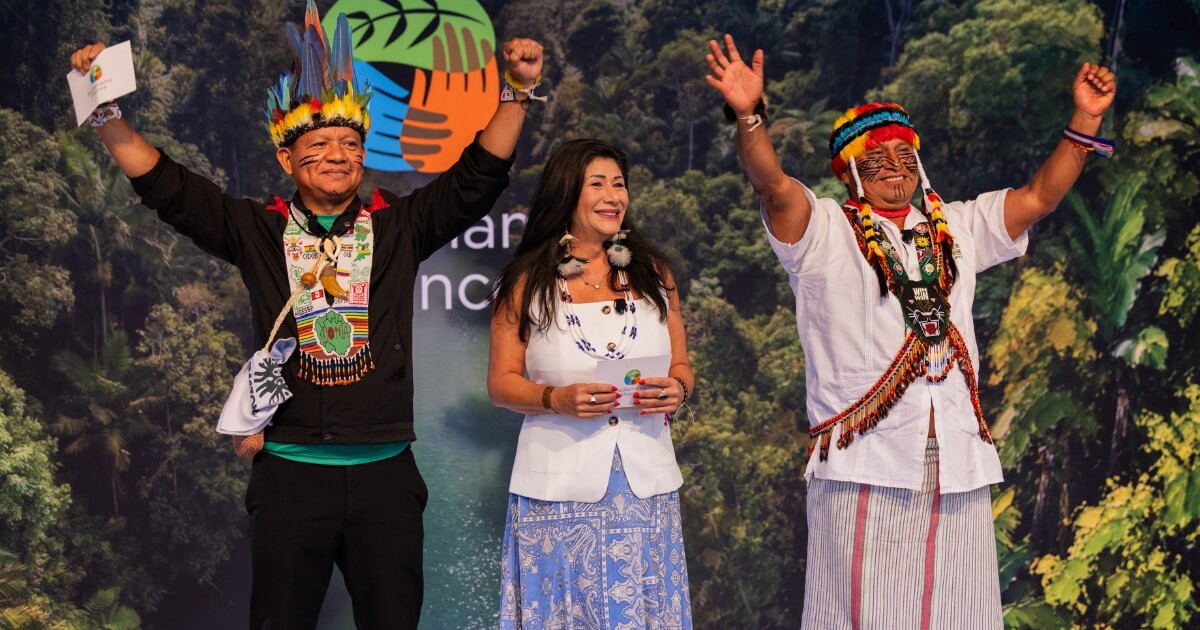 Gregorio Diaz Mirabal, International Affairs Advisor for Amazon Sacred Headwaters Alliance (left) Alliance, Atossa Soltani, Founder of Amazon Watch, (right), and Domingo Peas, President of Amazon Sacred Headwaters Alliance, greet attendees from stage.
From community-led programs to the future of the Amazon as a whole, the celebration turned toward one of the region’s most ambitious conservation efforts: protecting the Sacred Headwaters' region of the Amazon.
Bill welcomed Atossa Soltani, founder of Amazon Watch, to the stage alongside two Indigenous leaders: Domingo Peas, president of the Amazon Sacred Headwaters Alliance (ASHA), and Gregorio Díaz Mirabal, international affairs advisor to ASHA.
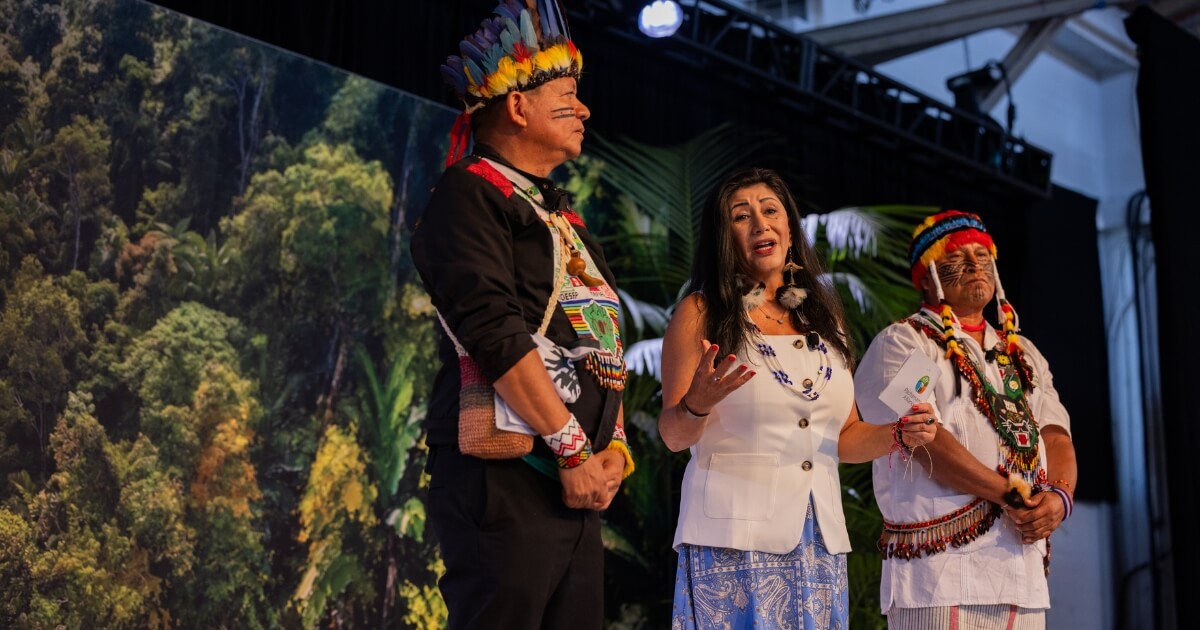 Atossa invites everyone in the room to join them in their cause to protect the Amazon.
Together, they spoke about the importance of Indigenous leadership and the need for a broader alliance to protect the Amazon’s intact forests, cultures, and living systems.
Atossa emphasized the shared responsibility to defend the forest and create the conditions for future generations to thrive.
“The commitment of all our Indigenous Nations is to defend the forest, permanently protect the intact forest, to protect our culture and to protect life,” she said.
She invited everyone in the room to see themselves as part of this larger effort.
“If we unite, if we join forces, we can make a huge difference for the next phase in order to guarantee a future of life for the next generation,” Atossa said.
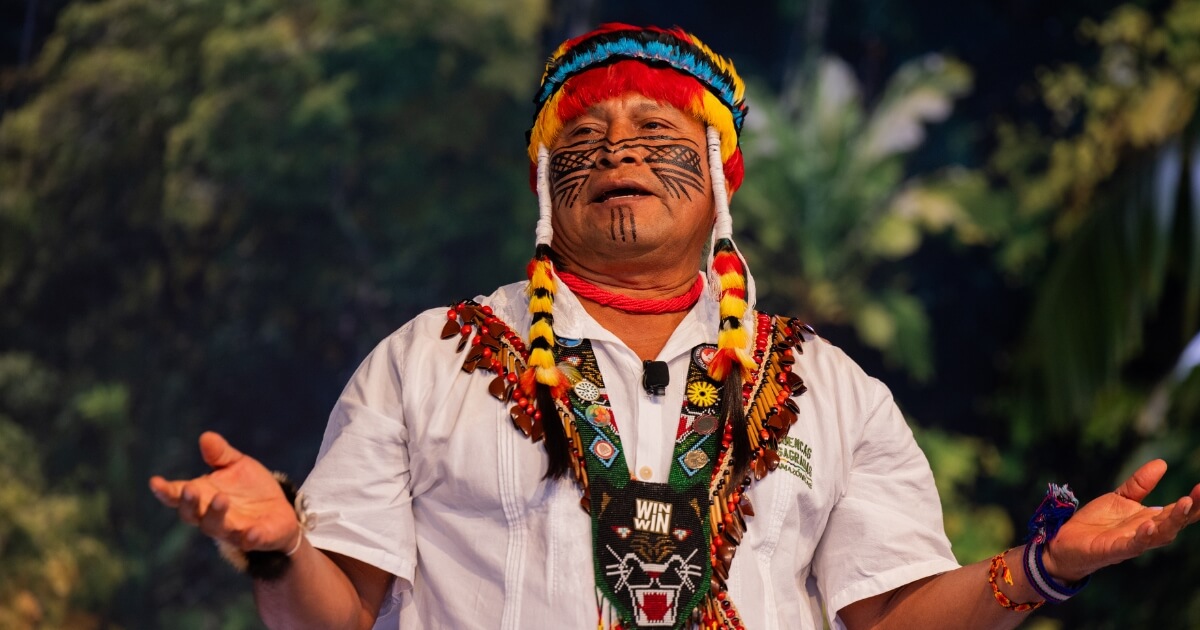 Domingo Peas, president of Amazon Sacred Headwaters Alliance
Domingo expressed gratitude to the supporters whose contributions have helped sustain the work of Indigenous organizations defending their territories.
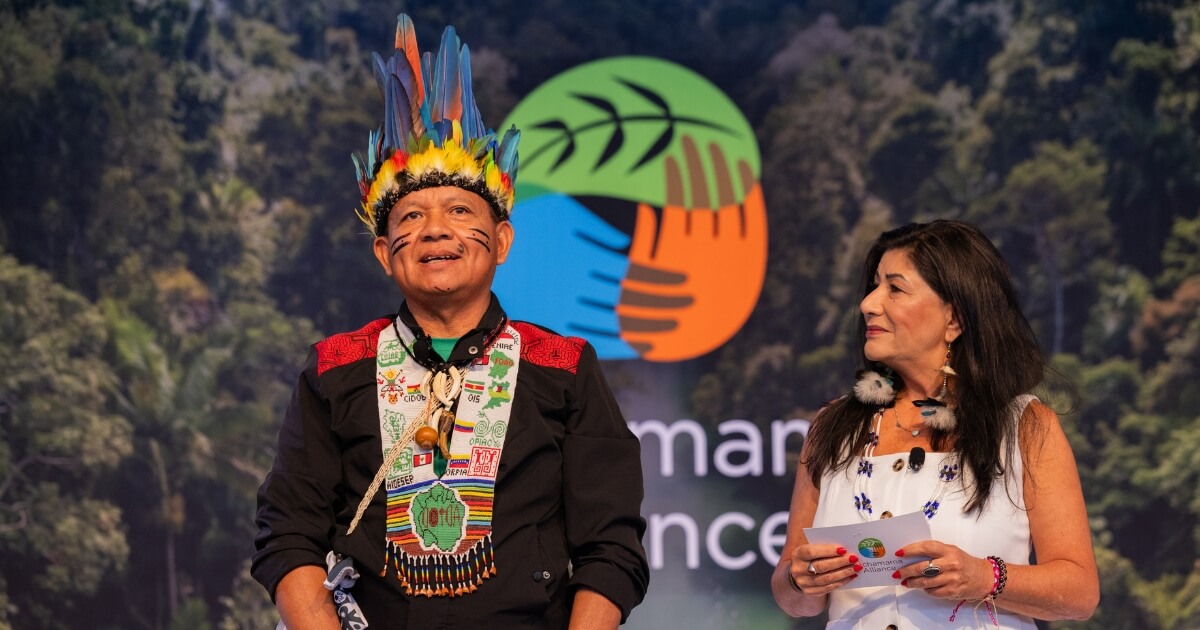 Gregorio shares the vision behind the Sacred Headwaters initiative.
Gregorio expanded on the vision behind the Sacred Headwaters initiative, emphasizing that protecting the region means safeguarding much more than its remarkable biodiversity. It means protecting the interconnected web of Indigenous communities, cultures, and living beings that depend on a healthy forest.
“The world calls it biodiversity, but for us, it’s the blood of life,” Gregorio said.
His words offered a powerful reminder that the Amazon is not simply a collection of natural resources. It is a living territory, inseparable from the people, relationships, and cultures that have cared for it across generations.
From a Bold Idea to a Global Movement
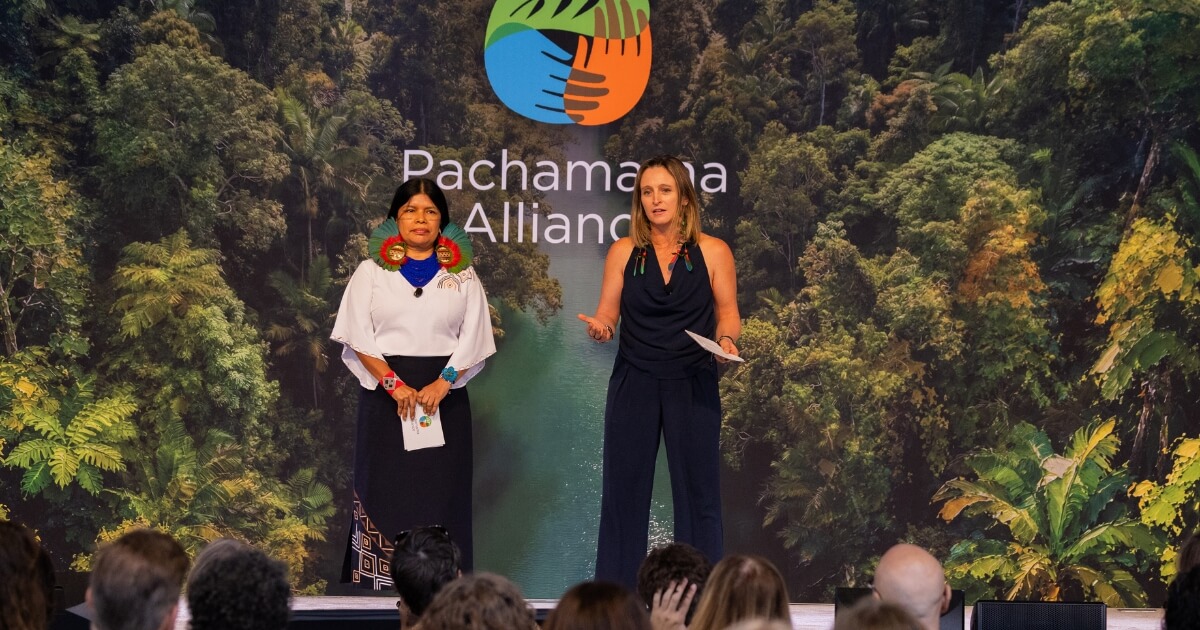 Patricia Gualinga (left), Indigenous Leader, Kichwa People, Sarayaku, and Natalia Greene (right), Global Director of Global Alliance for the Rights of Nature, on stage speaking to the audience.
Protecting the living world also means rethinking the systems and assumptions that shape our relationship with nature.
Natalia Greene, global director of the Global Alliance for the Rights of Nature, reflected on the evolution of the Rights of Nature movement. What was once considered a radical idea has gained momentum across countries, legal systems, and communities.
“What began as a bold idea has become now a global movement, spreading up to 40 countries through constitutions, law, ordinances, and case courts,” Natalia shared.
Her reflections illustrated what can happen when people dare to imagine a different relationship with the Earth—and work together to make that vision a reality.
Natalia then welcomed Patricia Gualinga, a Kichwa leader from Sarayaku and a defender of Indigenous and human rights, to the stage.
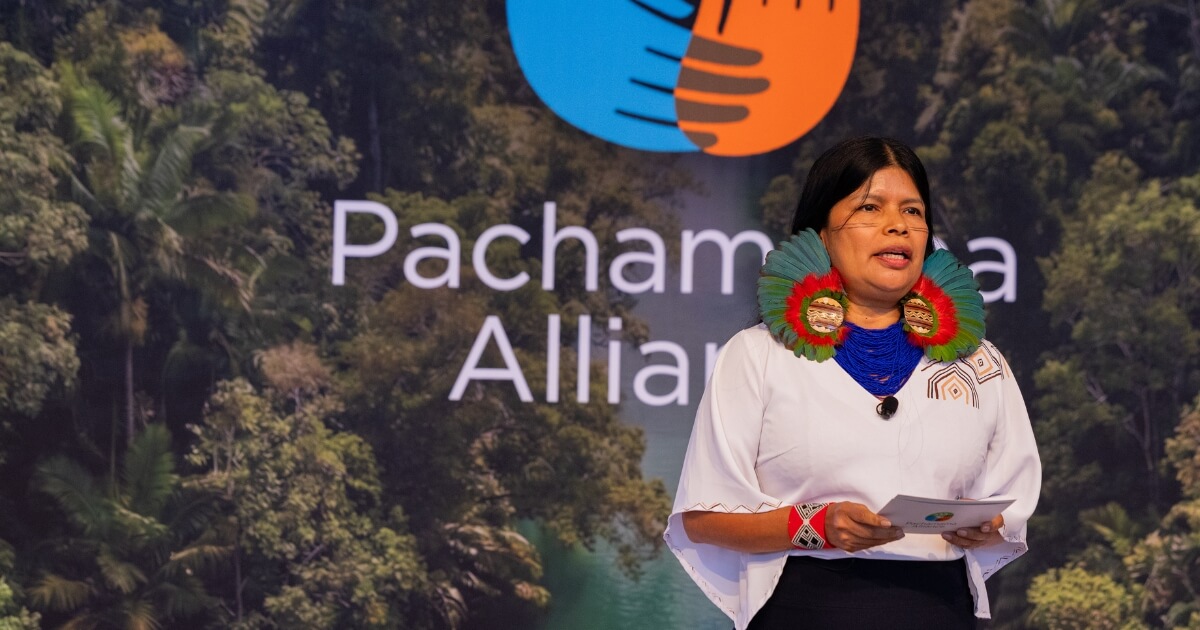 Patricia asks the people in the room to consider their role in shaping the future.
Patricia offered a clear and urgent reminder of what is at stake:
“Our planet, the Earth, is alive and it’s being destroyed. Now is the moment to choose. Which side are we on?”
Her question invited everyone in the room to consider the role we each play in shaping the future—not as distant observers, but as participants with a responsibility to the living world.
Imagining the Next Era of Pachamama Alliance
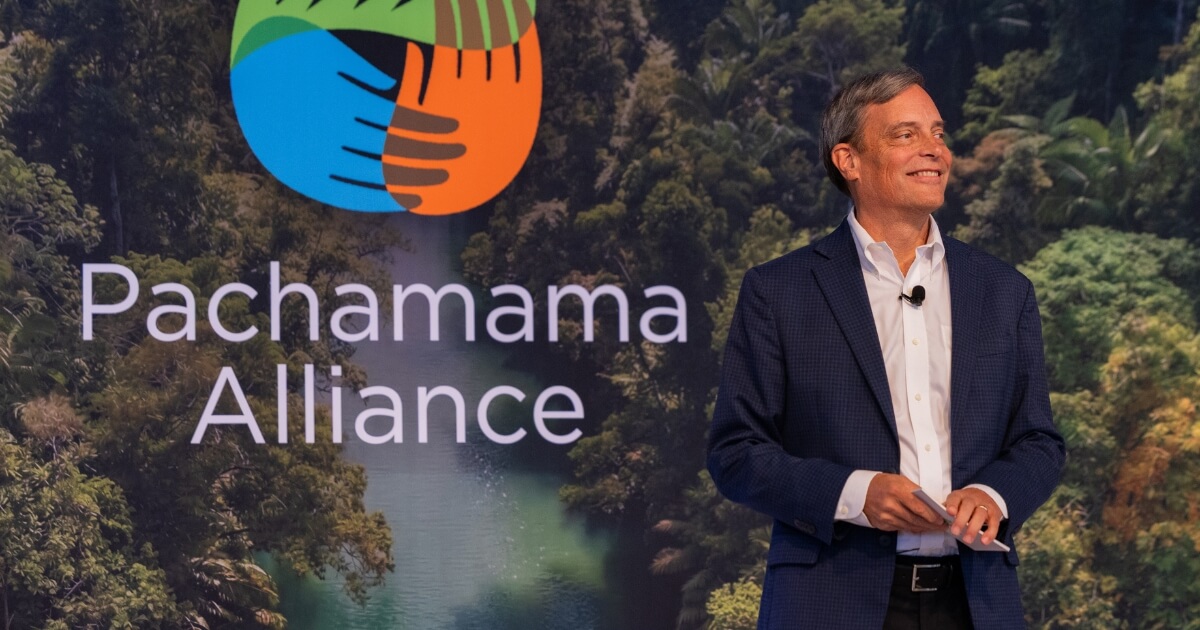 Tom Virden, Executive Chair and President of Pachamama Alliance, shares 3 strategic pillars for the organization's next chapter.
While the anniversary honored three decades of work, it was equally an opportunity to look ahead.
Bill introduced Tom Virden, Pachamama Alliance’s new Executive Chair and President, who shared his vision for the organization’s next chapter. Building on the relationships and experience cultivated over 30 years, Pachamama Alliance aims to deepen its work, expand its reach through partnerships and alliances, and create new ways for people to participate in the transformation our world needs.
Three strategic pillars will guide this next era:
- Protect the Source
- Activate the Transformational Shift
- Unite the Field of Change-Makers
These pillars reflect an interconnected vision: protecting the ecosystems and communities at the heart of this work, helping people develop the capacity to create meaningful change, and bringing together the wider community of changemakers working toward a thriving future.
That vision is already taking shape through programs and initiatives including Coming Home:We’re in This Together, Pachamama Journeys, the Catalyst Leadership Institute, Kinship Circles, Youth Initiative, and Confluence Alliance Program. Each offers opportunities for people to reconnect with themselves and the living world, develop their leadership, build community, and collaborate across movements.
Thirty years of experience have created a foundation. The next chapter is an invitation to build on it together.
Listening to the Next Generation
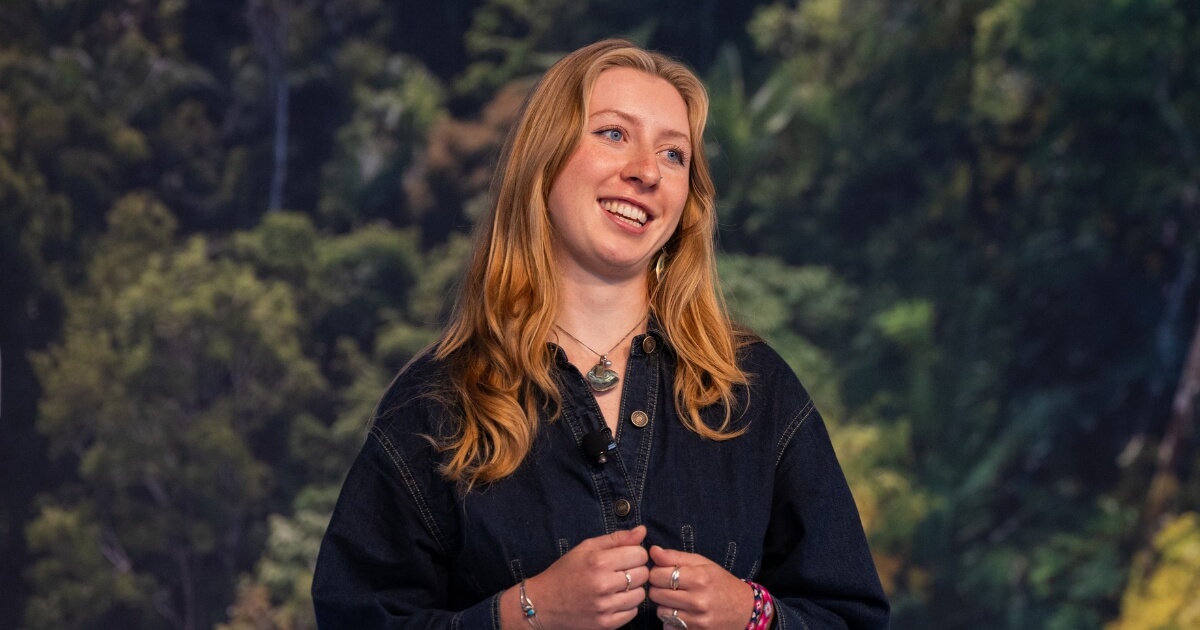 Elli Arzbaecher, Youth Program Coordinator at Pachamama Alliance, emphasizes the need for intergenerational spaces and collaboration with youth to address the challenges young people are experiencing.
Perhaps one of the most moving moments of the celebration came when Elli Arzbaecher spoke about the experience of being young in a rapidly changing world.
Elli reflected on the challenges young people face as they try to imagine their futures amid uncertainty—and on their determination to help create something better.
“We’re figuring out who we want to be and the lives we want to live while the world around us is changing faster than we can make sense of it. But young people are also very fierce in our determination to build something better,” Elli said.
Her words underscored the importance of creating spaces where young people can do more than imagine a different future. They need opportunities to experience it, shape it, and build it alongside people of other generations.
Elli offered a reminder that captured the spirit of the day:
“In times like these, the future is not something that one generation hands to the next. It’s something we hold together.”
That intergenerational vision continued with a message from Tsamaraw Ushigua, a nine-year-old from the Sápara Nation in the Ecuadorian rainforest.
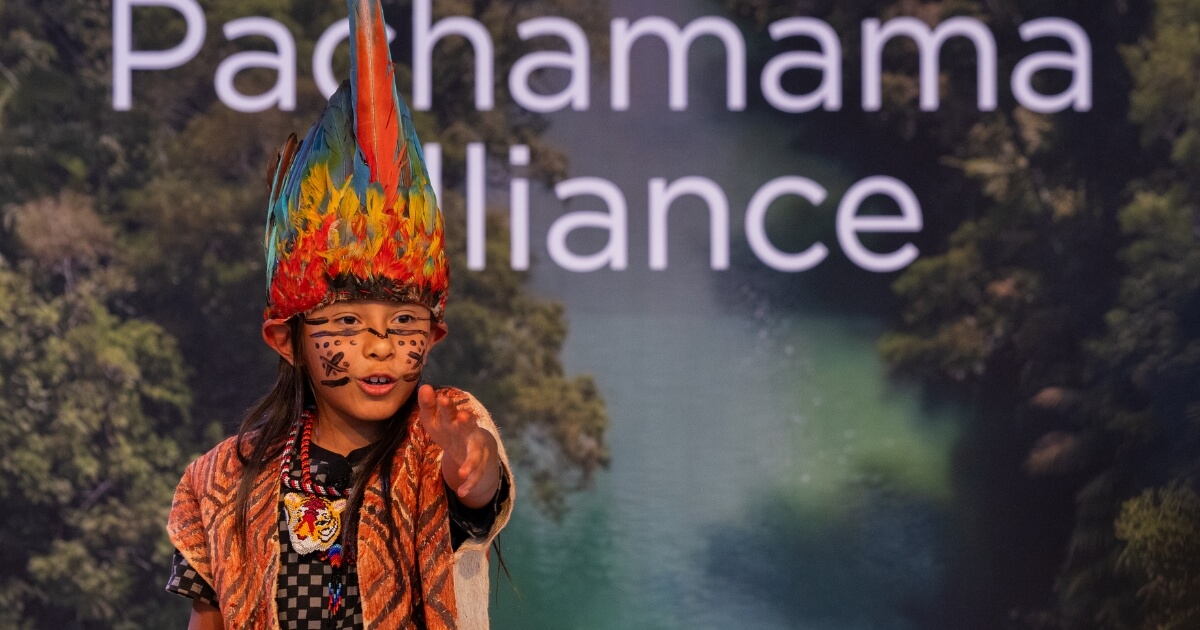 Tsamaraw Ushigua, a nine-year-old boy from Sápara Nation.
“I am from the Ecuadorian rainforest. I love the jungle. I will try everything I can to protect the Amazon.”
Then he turned the question toward the audience—and toward all of us:
“And you, what are you going to do to protect the Amazon?”
It was a fitting moment to close on. The future of the rainforest, and of our shared world, is not something that belongs to one generation alone. It is something we shape through our choices, our relationships, and our willingness to act together.
Looking Ahead: The Next 30 Years Begin Together
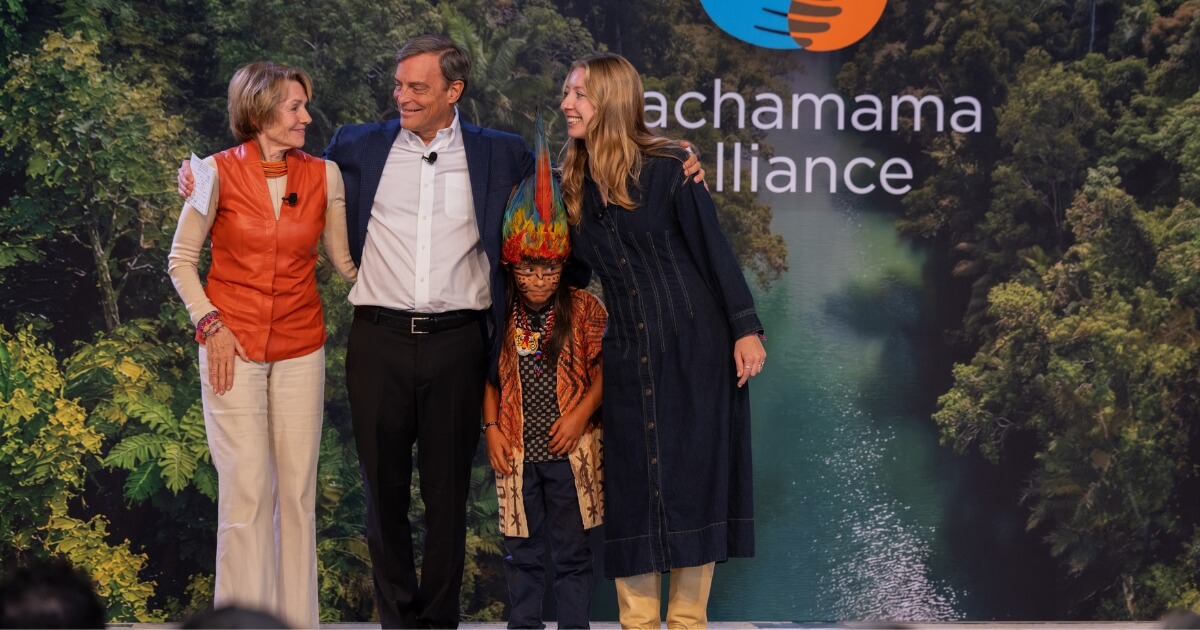 Lynne Twist, Tom Virden, Tsamaraw Ushigua and Elli Arzbaecher share the stage to close the 30th Anniversary Celebration in San Francisco.
Thirty years ago, Pachamama Alliance began with an invitation from Indigenous leaders in the Amazon to build a different kind of relationship with the outside world.
Thirty years later, that invitation continues to ripple outward—through the communities protecting their territories, the leaders creating new possibilities, and the people around the world finding ways to contribute to a thriving, just, and sustainable future.
Our anniversary celebration gave us a chance to honor the people and partnerships that brought us here, reflect on what we have made possible together, and gather the imagination and collective commitment needed for what comes next.
To everyone who joined us in San Francisco, tuned in online, or celebrated with us in communities around the world: thank you for being part of this journey.
And above all, we extend our gratitude to our Indigenous partners, whose leadership, knowledge, and vision continue to guide and shape this work.
The next 30 years will ask us to keep listening, learning, building relationships, and finding new ways to stand alongside those protecting the living world.
The future is not something we wait for. It is something we create together.
We’re grateful to be building it with you.