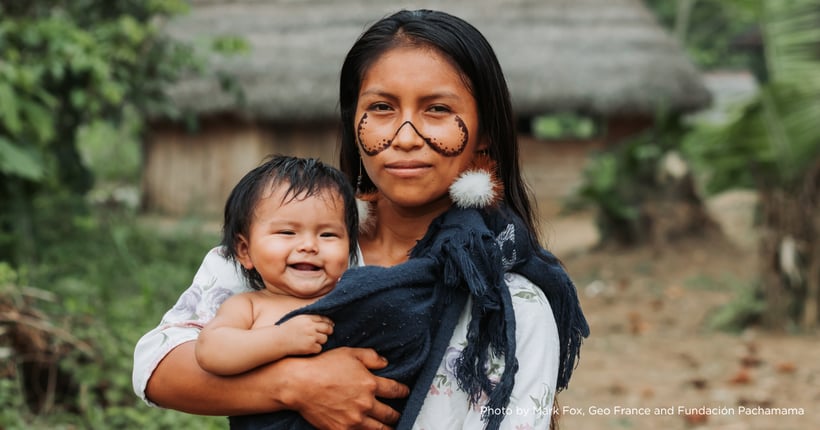
 Across Ecuador, many women enter pregnancy and childbirth without the guarantees of dignity, respect, and informed choice. Experiences of mistreatment, lack of information, or procedures performed without consent remain far too common—especially for Indigenous and rural women.
This reality has a name: obstetric violence.
In honor of International Women's Day this month, we'd like to share the work Fundación Pachamama is doing to address this issue and transform maternal and child health in the Amazon.
Naming the Problem: What Is Obstetric Violence?
Obstetric violence is recognized by Ecuador’s Ministry of Public Health as a form of gender-based discrimination that violates human rights and reproductive rights. It often includes:
- Dehumanizing or dismissive treatment
- Lack of clear information or consent
- Unnecessary medical interventions
- The pathologization of natural processes like pregnancy and childbirth
These experiences are not rare. According to national data, nearly half of women in Ecuador report experiencing obstetric violence in their lifetime—with significantly higher rates among Indigenous and rural communities.
Naming this reality is a critical first step. Because what goes unnamed too often goes unchallenged.
Why Visibility and Intercultural Care Are Essential to Prevention
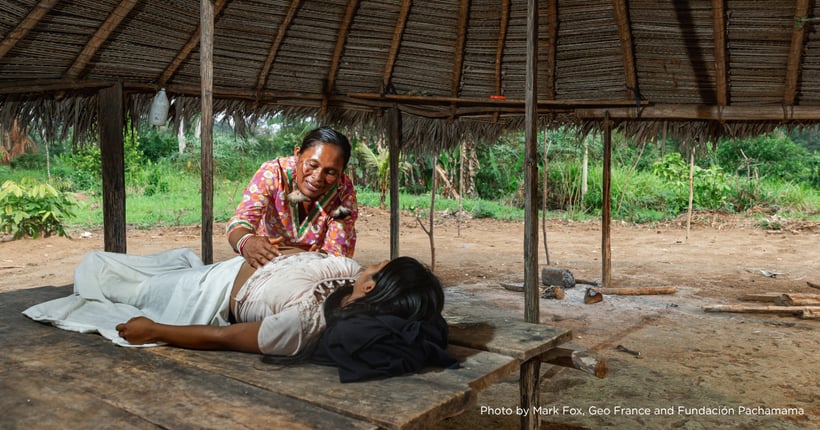 Obstetric violence is often normalized within healthcare systems, making it difficult to recognize and even harder to address. This is why visibility is such a powerful form of prevention. When harmful practices are named, they can no longer remain invisible—and when women understand their rights, they are better equipped to advocate for themselves and demand the care they deserve.
At its foundation, respectful maternal care means that every woman receives clear, understandable information about her options and is able to give—or withhold—informed consent. It means being treated with dignity, having privacy honored, and being met with compassion rather than judgment. It also means having the choice to be accompanied by a trusted person throughout the experience. These are not added benefits or ideal scenarios—they are the basic conditions that define quality care.
At the same time, truly respectful care must go beyond clinical standards to recognize a deeper truth: childbirth is not only a medical event, but also a cultural, relational, and profoundly personal experience. Yet too often, healthcare systems overlook this dimension, creating barriers that lead to misunderstanding, mistrust, and harm—particularly for Indigenous women.
An intercultural approach offers a path forward. It fosters more balanced and respectful relationships between healthcare providers and patients by honoring Indigenous knowledge, valuing traditional practices, and recognizing the essential role of midwives. By bridging clinical care with cultural identity, language, and trust, this approach helps ensure that care is not only safe, but also meaningful and humane.
When visibility and intercultural understanding come together, they create the conditions for transformation—where women are informed, respected, and supported, and where care systems can evolve to truly serve the whole person.
Preventing Harm at the Root: From Awareness to Action
Fundación Pachamama is preventing obstetric violence by addressing both individual empowerment and systemic change through a holistic, community-centered approach. The three pillars at the heart of this work are:
1. Education for Empowerment
Women and families receive accessible, culturally relevant information about maternal health and their rights—so they can make informed decisions and advocate for respectful care.
2. Intercultural Dialogue
The program strengthens relationships between communities, midwives, and healthcare providers—ensuring that ancestral knowledge is respected alongside clinical practices.
3. Institutional Collaboration
Fundación Pachamama works with health systems to improve standards of care, build capacity, and integrate a rights-based, intercultural approach into medical practice.
This holistic model ensures that women are not passive recipients of care—but active participants and decision-makers in their own maternity journeys.
To deepen this impact, Fundación Pachamama is advancing a three-part campaign designed to move from awareness into action. This includes the creation of educational infographics that raise visibility around obstetric violence and women’s rights, the sharing of testimonial videos that uplift the lived experiences of midwives and communities, and a sensitization workshop with healthcare providers aimed at strengthening respectful, safe, and intercultural care practices.
Together, these initiatives are helping to shift both perception and practice—laying the foundation for a healthcare system rooted in dignity, respect, and relationship.
A Future Where Birth Is Safe, Dignified, and Free
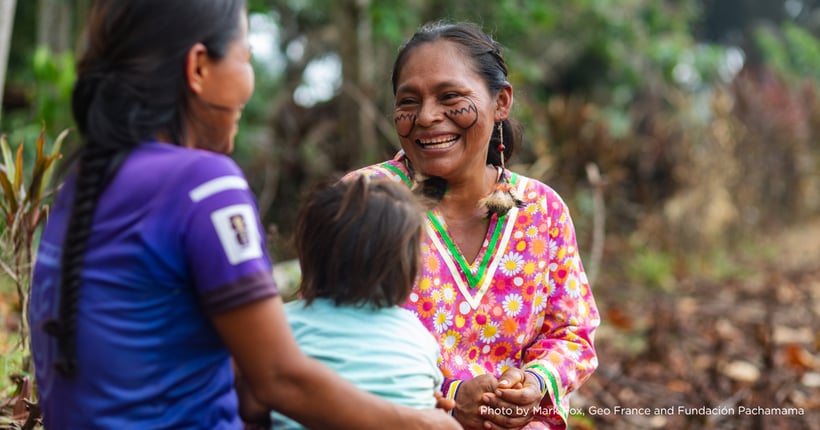 Preventing obstetric violence is not only about addressing harm—it is about reimagining what care can look like.
When women are informed, they are more protected.
When culture is honored, care becomes more human.
When systems evolve, entire communities thrive.
Fundación Pachamama is helping to create a future where every woman can experience childbirth as it should be: safe, supported, and deeply respected.