Food security is a basic necessity for life. However, for many communities in the Amazon, access to reliable, nutritious food is increasingly under threat. Climate change, deforestation, and economic pressures are reshaping traditional food systems, making it more urgent than ever to support sustainable, locally rooted solutions.
In response to this issue, Fundación Pachamama has launched Farmer Field Schools across the Amazonian provinces of Napo, Pastaza, and Morona Santiago. This initiative will support 1,000 chakramamas and chakrayayas, women and men farmers, alongside 34 partner organizations through 259 hands-on training sessions.
What Are Farmer Field Schools?
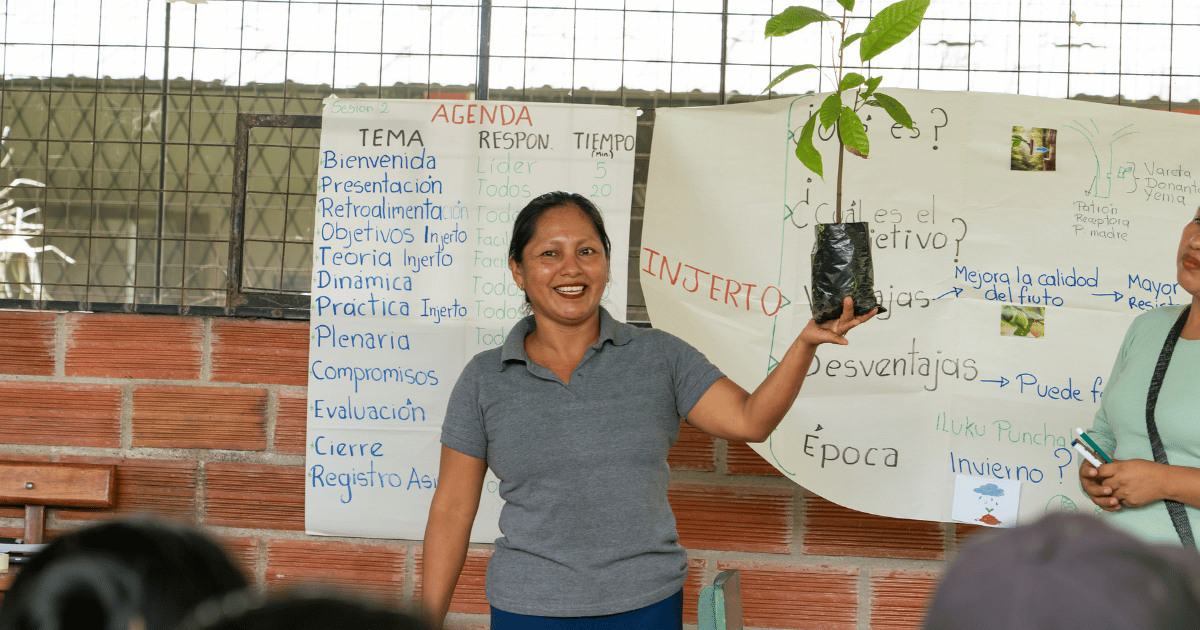
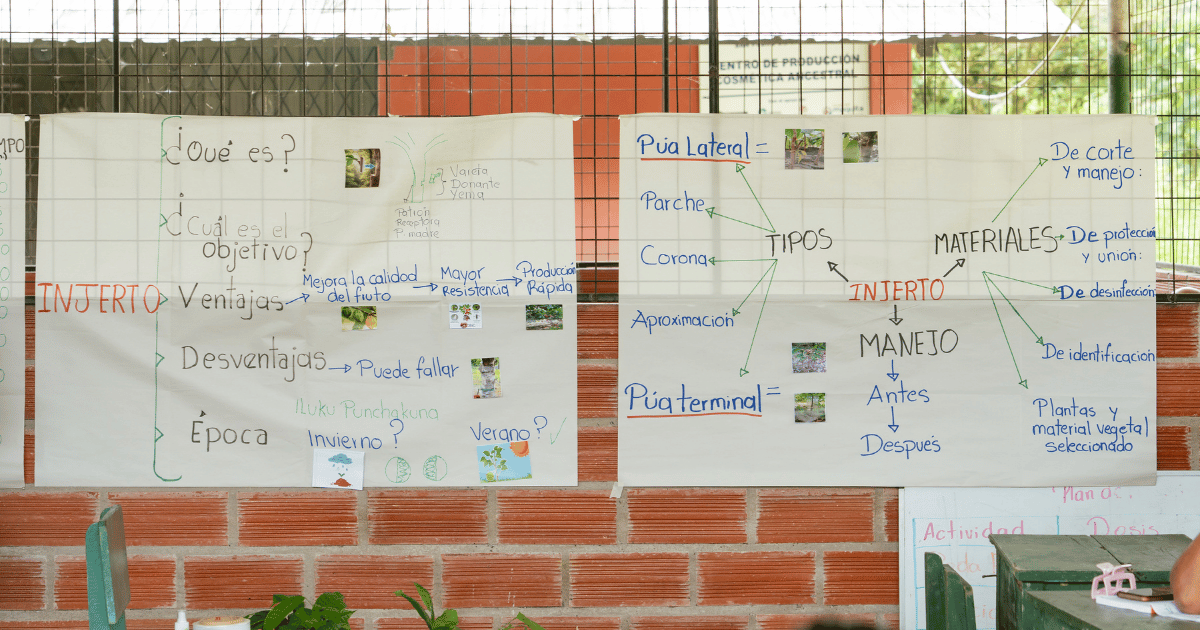
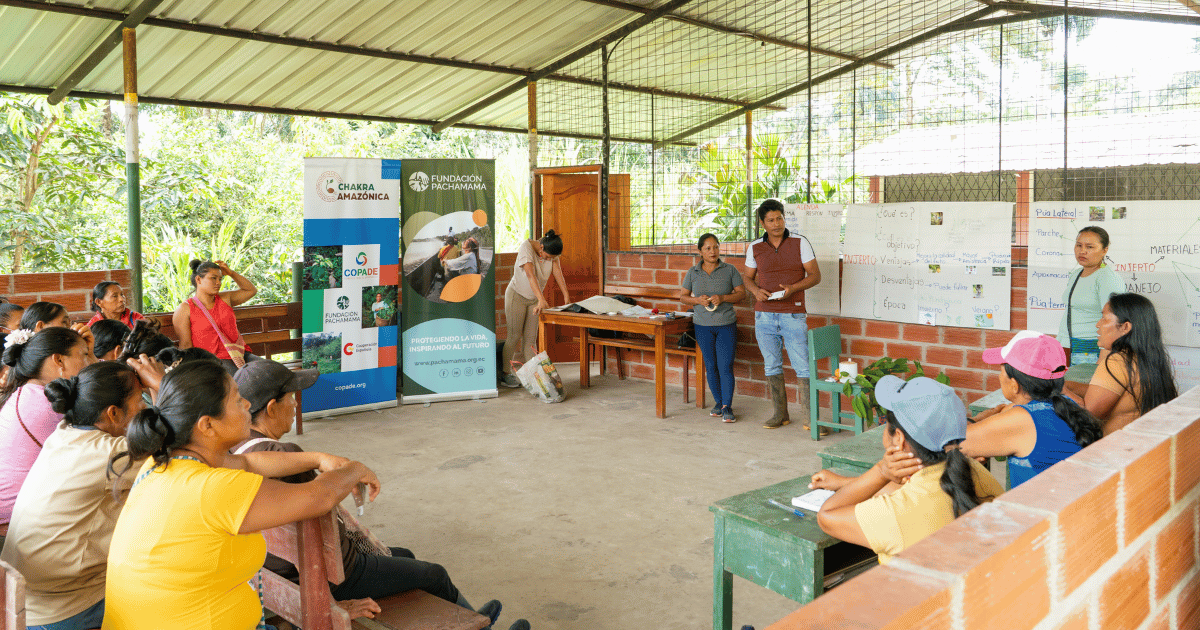 Farmer Field Schools are a practical, community-based training model rooted in the principle of “learning by doing.” Rather than relying on theory alone, farmers engage directly in field-based workshops that build on their existing knowledge through real-time application in their own cultivation systems.
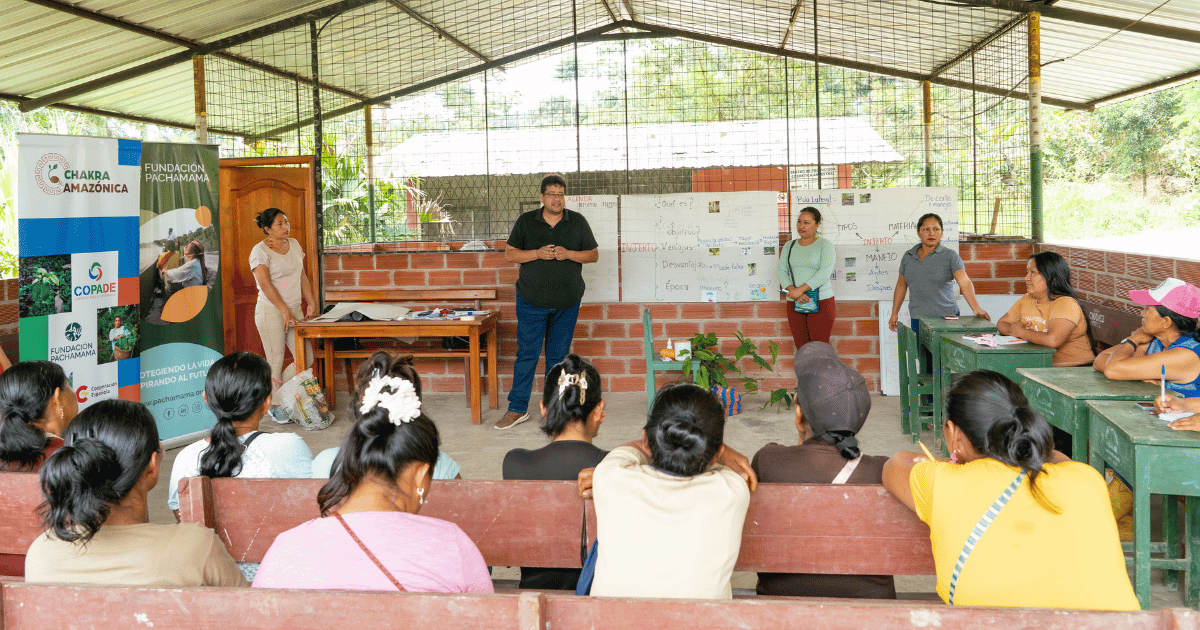
A key element of this approach is its community-led structure. Consultant-facilitators are selected from partner organizations and trained to guide sessions in the farmer’s native language. This creates a learning environment that is culturally relevant, accessible, and grounded in trust—fostering meaningful knowledge exchange between peers.
The program is further supported by SIG Chakra, a data platform that collects geographic, social, productive, and economic information about each farmer’s agroforestry system. By visiting individual chakras, ajas, and goneas (cultivation plots), the program identifies specific challenges and tailors the curriculum to meet real, on-the-ground needs.
Three Pathways to Regenerative Agriculture
 The Farmer Field Schools focus on three key pillars:
- Revitalizing Ancestral Knowledge: Indigenous farming systems in the Amazon are rooted in generations of observation, adaptation, and deep relationship with the land. This pillar seeks to restore that wisdom and honor practices such as crop diversity, natural soil regeneration, seed saving, and forest stewardship that have sustained communities for centuries. By bringing these traditions back to the center, farmers strengthen cultural identity while reinforcing resilient, climate-adaptive food systems.
- Implementing Good Agricultural Practices: Alongside traditional knowledge, farmers are supported in applying practical techniques that improve productivity, crop health, and long-term sustainability. This includes soil conservation methods, water management, crop rotation, pest management, and post-harvest handling. These practices help farmers increase yields and quality while reducing environmental impact, ensuring that their land remains fertile and productive for future generations.
- Promoting the Use of Bio-inputs: Bio-inputs—such as organic fertilizers, compost, and natural pest repellents—offer an alternative to synthetic chemicals that can degrade soil and pollute ecosystems. Through hands-on training, farmers learn how to produce and apply these inputs using locally available materials. This not only reduces costs and dependency on external products but also enhances soil health, biodiversity, and the overall balance of the agroforestry system.
Together, these approaches support a regenerative model of agriculture, one that protects and restores the health of the ecosystems.
Toward a Thriving Amazon
 By strengthening farmers’ knowledge and decision-making capacity, this initiative directly contributes to improved food security and increased household income. At the same time, it advances broader environmental goals.
Healthier soils, reduced deforestation, and lower levels of air and water pollution are all part of this vision—one where sustainable agriculture and ecological stewardship go hand in hand.
This work would not be possible without the support of dedicated partners. We extend our deep gratitude to the Spanish Agency for International Development Cooperation, the Madrid City Council, the French Development Agency, the Inter-American Development Bank, Fundación Copade, and the Chakra Corporation for their commitment to advancing rural development in the Amazon.